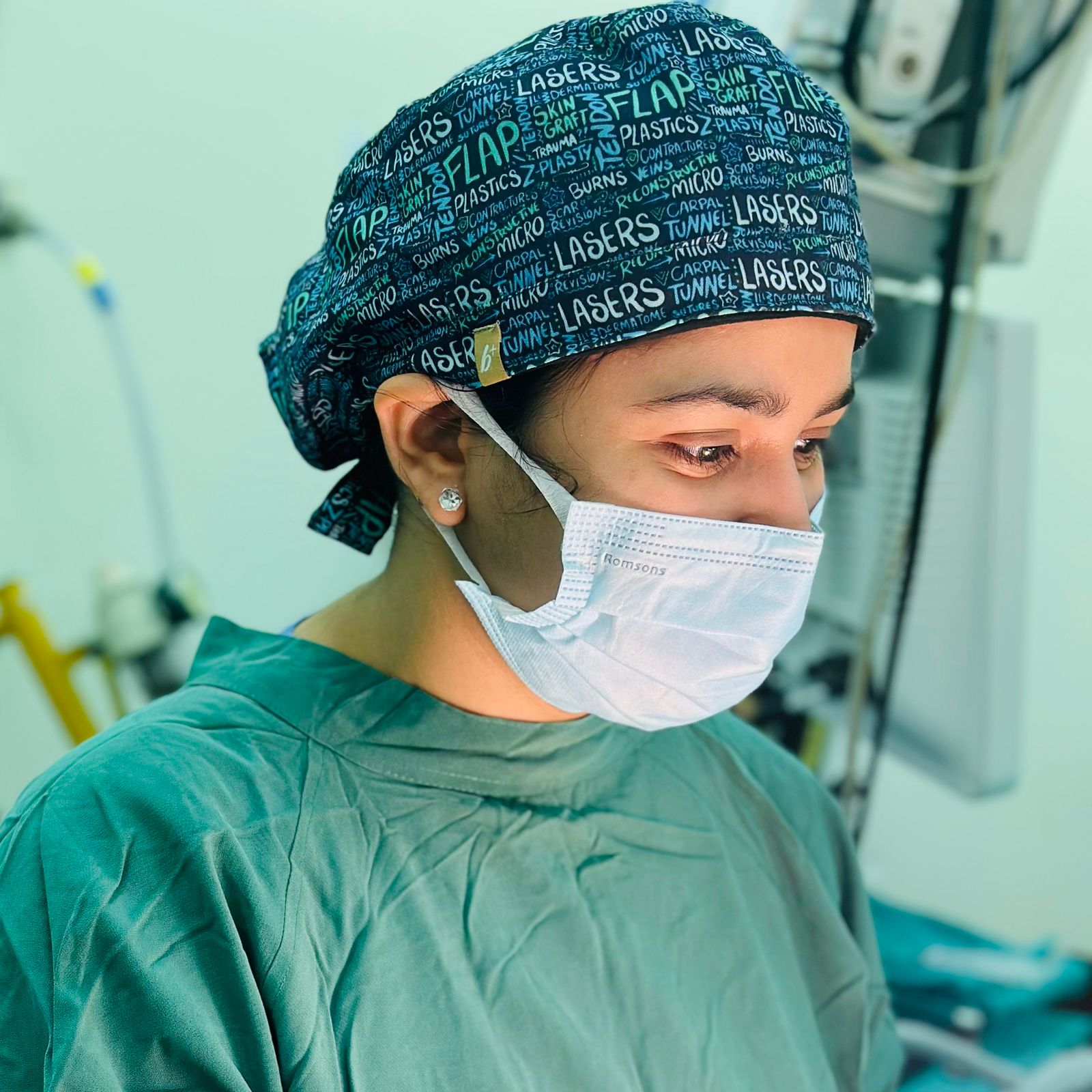
How Plastic Surgery Taught Me to Look Beyond What Is Missing- A Story by Dr. Rishika Bachani

Where others see loss, we see possibility– By Dr. Rishika Bachani
My first emergency duty as a plastic surgery resident taught me more about the specialty than any textbook ever could.
A patient arrived late at night carrying a box packed with ice with an amputated finger inside it.
As a new resident, I remember staring at the box with a mix of curiosity, anxiety, and disbelief. Where I saw loss, my seniors and consultants saw possibility.
Within minutes, the discussion shifted from how it happened and what could be done.
→ “How long ago was the injury?”
→ “Was the finger preserved properly?”
→ “Do we have suitable vessels?”
→ “Can it be replanted?”
That night, I learned a lesson that shifted my mindset. Plastic surgeons see the world differently.
We are trained to focus on what can still be saved.
Looking back, I realized this is exactly what drew me to plastic surgery.
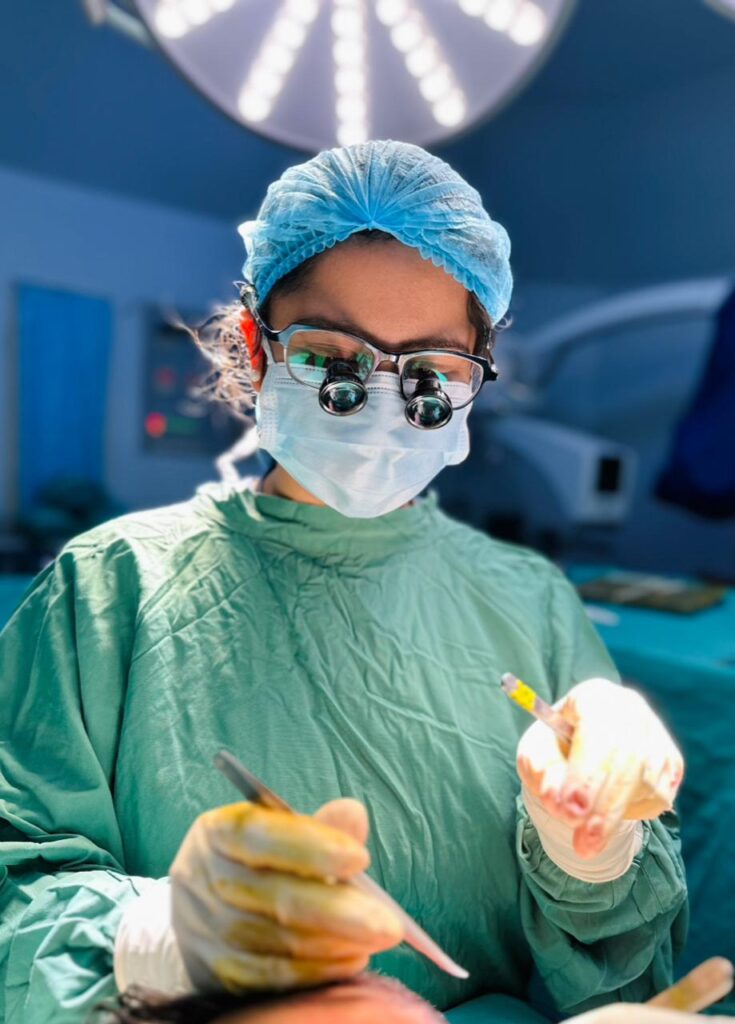
Plastic Surgery: Looking Beyond What Is Missing
Like most medical students, I had a narrow view of plastic surgery, thinking of it strictly in terms of cosmetic procedures and aesthetics.
Training opened a broader world, showing me that we don’t just restore movement and function; we restore identity.
I was fascinated most by the variety of operations and the mindset behind them.
Plastic surgeons are professional optimists.
- Show us a severed finger, and we ask if it can be replanted.
- Show us a paralysed limb, and we start discussing nerve transfers, tendon or muscle transfers.
- Show us a burn contracture that has limited movement for years, and we begin to think about how that movement can be restored.
- Show us a deformity, a defect, or a disability, and our instinct is rarely to ask, “Why?”
Instead, we ask, “What can be done?”
I found my place between optimism and relentless problem-solving.
Over the years, I have witnessed remarkable patient journeys.
→ Seen patients with devastating burns regain movement after years of disability.
→ Seen individuals with brachial plexus injuries slowly recover functions they believed were lost forever.
→ Watched amputated fingers and hands being given another chance through microsurgery.
→ Met patients whose scars tell powerful stories of strength and recovery.
Yet what stays with me is the patient.
The young man returning to work after a life-changing injury.
The child who grows up with confidence after reconstructive surgery.
The burn survivor learning to use their hand again.
The patient who walks into the clinic uncertain about the future and leaves with renewed hope.
These experienced moments remind me that plastic surgery helps people regain parts of their lives.
One memory that stays with me is from a follow-up clinic visit, where a reconstructive surgery patient returned months later, eager to demonstrate their newfound independence.
The ultimate victory of surgery is a patient’s return to a confident and independent life. It is something scans and photographs can never measure, though daily actions say it all.
The surgical moments remind me that the true reward of reconstruction lies in restoring what is deeply personal.
The greatest lesson here is that healing means helping a patient move forward, even when a complete return to the past is impossible.
A scar may remain.
A reconstructed hand may never look exactly like the original.
A paralysed limb may not regain every movement.
Yet, achieving meaningful, functional improvement remains entirely possible.
A patient can regain independence.
A child can grow up with confidence.
A burn survivor can return to daily life.
It is the beauty of reconstruction.
While described as a specialty of reconstruction, plastic surgery is ultimately a field of possibility.
It teaches us to look at what is missing, what remains, and what is possible.
Every patient who walks through our doors has experienced loss, yet time and again, they show us that recovery is about building a future rather than erasing the past.
As I continue my journey, I hope to contribute to patient care, research, and education while learning from mentors, colleagues, and patients. Ultimately, I want to play a part in advancing reconstructive surgery, so more patients can benefit from its possibilities.
Above all, I hope never to lose the sense of wonder that first drew me to plastic surgery.
The wonder of seeing colour return to a replanted finger.
The joy of watching a patient perform a movement they thought they had lost forever.
The privilege of helping someone begin again.
Where Others See Loss: Dr. Rishika Bachani
Years into my training, this core mindset remains. Whenever I encounter a difficult problem, I still find myself asking the same question:
- Not “What has been lost?”
- But “What can still be saved?”
Perhaps that is what plastic surgery has taught me above all else: to look beyond what is missing.
To focus on possibilities more than limitations.
To believe that loss does not always have the final word.
Because what is missing is only part of the story.
The more important question is what remains, what is possible, and what can still be rebuilt.
We look past the immediate loss to focus entirely on the possibility ahead.
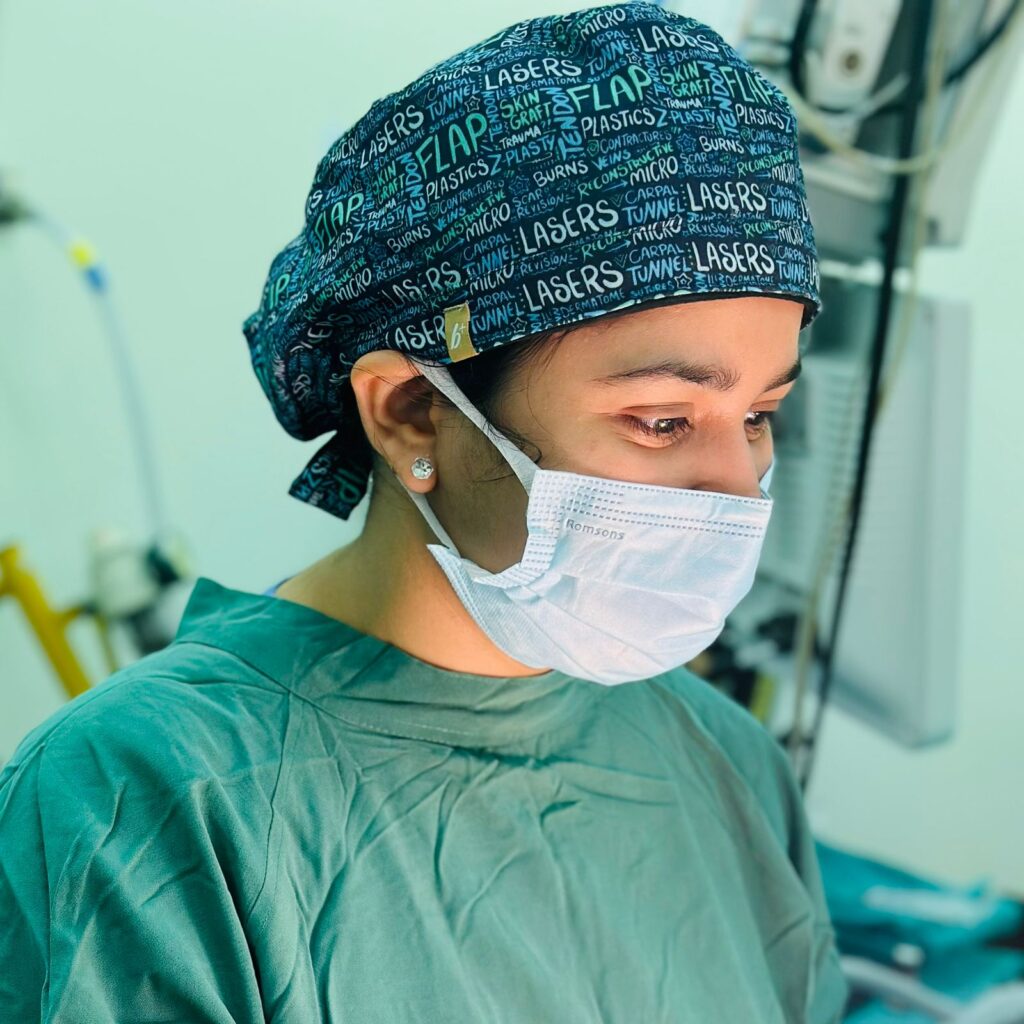
A story by Dr. Rishika Bachani
Dr. Rishika Bachani is a Plastic Surgery Resident at Sir Ganga Ram Hospital, New Delhi, dedicated to the transformative impact of reconstructive surgery on patients’ lives.

Powered by OptContent Global
[…] Explore the full story shared by Dr. Rishika Bachani on OptContent Global here. […]
[…] that modern advancements in healthcare must be measured in micrometers. When a surgeon like Dr. Rishika Bachani encounters a severely compromised physical condition under extreme pressure, there is no reliance […]
[…] operating table? It requires a fundamental shift in perspective. In her deeply personal feature, How Plastic Surgery Taught Me to Look Beyond What Is Missing—A Story by Dr. Rishika Bachani, Dr. Bachani pulls back on the clinical mindset of a reconstructive plastic surgeon. Where the […]